The Shirt Code — A Modern Gentleman's Field Guide Vol. 01 · Men's Formal Shirts Presented by Options Mall, Mumbai
Reference atlas · Plates I–IX

The collar atlas.

The collar sits closest to the face, so it shapes first impressions more than any other part of a shirt. This atlas documents seven men's shirt collar styles — how they are proportioned, which tie knots they welcome, and where each belongs.

Every collar is described by three measurements of character rather than numbers: its spread (how far apart the points sit), its point length and the height of its stand. Change any one, and the shirt's personality changes with it.

Annotated technical drawing of a shirt collar showing the collar stand, collar points, point length, spread and tie space SPREAD POINT LENGTH COLLAR STAND TIE SPACE COLLAR POINT
Garment lineMeasurement of characterNot to scale
Plate II
The narrow spread

Point collar

The point collar has relatively long points that sit close together, leaving only a narrow gap for the tie. The result is a strong downward V that draws the eye vertically — a visual effect that tends to lengthen the face and neck.

It is one of the most traditional collar shapes and remains a natural choice for conservative business dressing. Because the gap is narrow, it suits slimmer tie knots such as the four-in-hand; a large knot will force the points apart and look crowded.

NarrowWide
  • Visual effectLengthens; vertical emphasis
  • Tie knotsFour-in-hand and other slim knots
  • Face shapesOften flattering on rounder faces
  • SettingsTraditional business, interviews
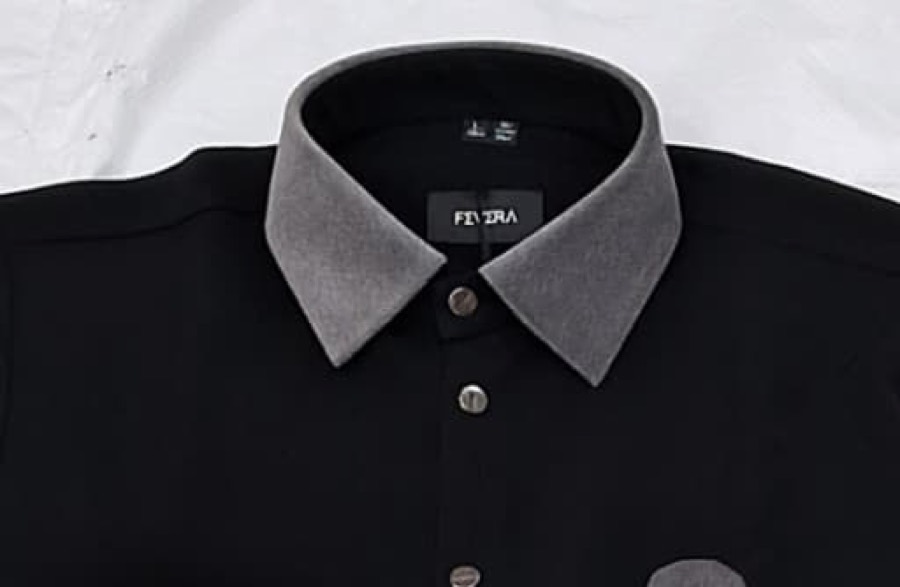
Plate III
The everyday standard

Classic collar

Sometimes called a straight or standard collar, the classic sits between the point and the semi-spread: moderate point length, moderate spread. It is the collar most people picture when they imagine an office shirt, and it is found on a large share of formal shirts for good reason — it works with and without a tie, with suits and on its own.

If you own only a few formal shirts, a classic collar is the safest foundation.

Close-up of a black shirt with a grey contrast collar of moderate spread
Obs. III A moderate-spread collar, made emphatic by a grey contrast fabric
NarrowWide
  • Visual effectBalanced, neutral
  • Tie knotsFour-in-hand, half-Windsor
  • Face shapesSuits most
  • SettingsOffice, meetings, everyday formal
Plate IV
The modern middle

Semi-spread collar

The semi-spread opens the points a little wider than the classic. It frames the face slightly more broadly and leaves room for a medium knot, yet still looks tidy when worn open. That versatility has made it one of the most popular collars in contemporary formal shirts.

It is an excellent choice for professionals who move between tie and no-tie days within the same week.

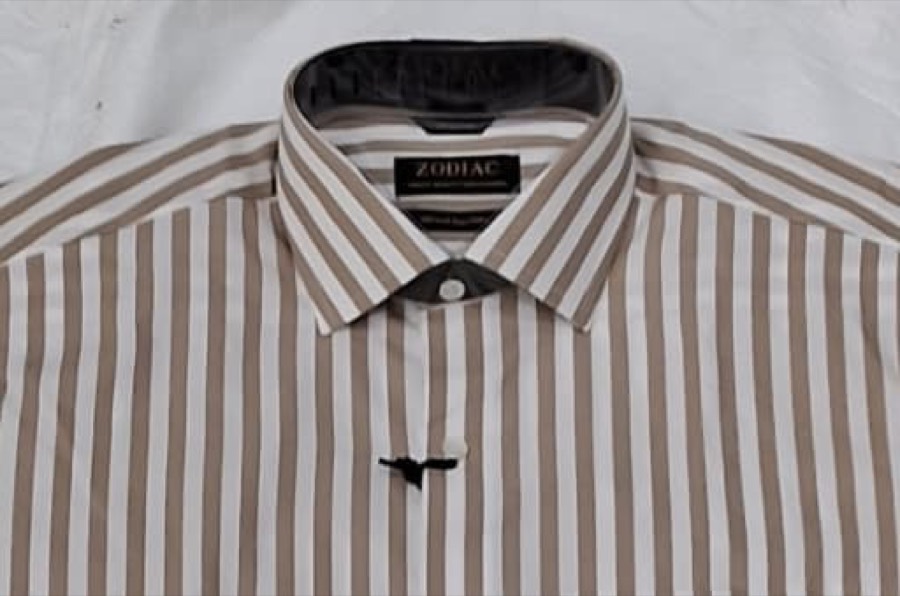
Close-up of a cream and brown striped shirt collar with points angled outward
Obs. IV Points angled outward on a cream stripe
NarrowWide
  • Visual effectOpen, contemporary
  • Tie knotsFour-in-hand, half-Windsor
  • Worn openHolds its shape well
  • SettingsModern office, presentations, dinners
Plate V
The wide frame

Spread collar

A spread collar angles its points distinctly outward, creating a wide space at the neck. It was designed to frame larger tie knots, and it gives the face a broader, more horizontal frame — which can balance a long or narrow face.

Spread collars look polished and assured, particularly with suits. They work well with fuller knots such as the half-Windsor or Windsor, and their wide shape keeps them looking intentional when worn without a tie.

NarrowWide
  • Visual effectBroadening; assured
  • Tie knotsHalf-Windsor, Windsor
  • Face shapesOften flattering on longer faces
  • SettingsSuits, formal events, presentations
Plate VI
The extreme spread

Cutaway collar

The cutaway takes the spread to its limit: the points sweep back towards the shoulders, almost horizontally. It is a confident, fashion-forward collar that exposes plenty of the tie knot — so the knot itself becomes part of the look.

Cutaways pair best with substantial knots and wider ties. Worn open, they create a clean, modern neckline, though the collar needs a firm structure to keep from collapsing.

NarrowWide
  • Visual effectBold, horizontal, fashion-led
  • Tie knotsWindsor, half-Windsor
  • NeedsA firm, well-shaped collar
  • SettingsFormal events, statement suiting
Plate VII
The buttoned point

Button-down collar

The button-down collar fastens its points to the shirt front with small buttons. Brooks Brothers introduced it in 1896, inspired by polo players who buttoned their collars down to stop them flapping — and it has kept a sporting, relaxed character ever since.

Because the points are anchored, a button-down holds a soft, rolled shape and looks neat without a tie, which makes it ideal for business travel, smart-casual offices and blazers. Traditionally it is considered less formal than unbuttoned collars, so it is rarely the choice for the most formal occasions.

NarrowWide
  • Visual effectRelaxed, soft roll
  • Tie knotsFour-in-hand, or none
  • Worn openExcellent — points stay put
  • SettingsSmart casual, travel, blazers
Plate VIII
The rounded point

Club collar

The club collar replaces sharp points with rounded tips. It has a distinctly vintage feel, associated with the early twentieth century, and today it is chosen as a characterful detail rather than a default. Where it is available, it adds softness and personality to otherwise classic dressing.

Keep the rest of the outfit simple and well-tailored so the collar reads as deliberate. A slim tie with a neat knot suits its compact shape.

NarrowWide
  • Visual effectSoft, vintage, distinctive
  • Tie knotsSlim knots; or a tie bar
  • AvailabilityLess common; a speciality choice
  • SettingsCharacterful formal and evening wear
Plate IXField observationsCollars in the wild

Read the collar before the colour.

These shirts show how collar shape, contrast and construction alter a shirt's character. Compare each with the drawings above — notice the spread, the length of the points and how the collar stands.

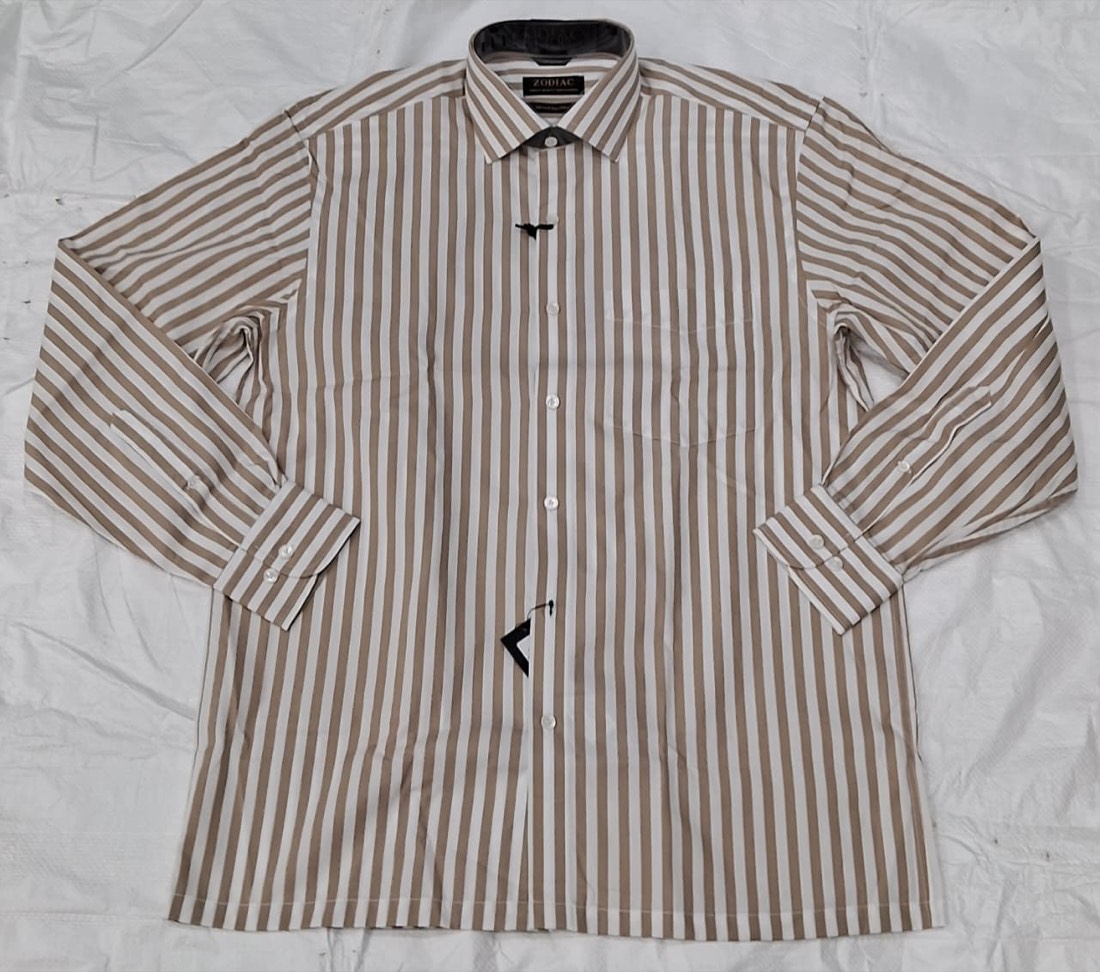
Cream and brown striped men's shirt laid flat showing a structured collar
Obs. 01 Structured collar on a bold stripe
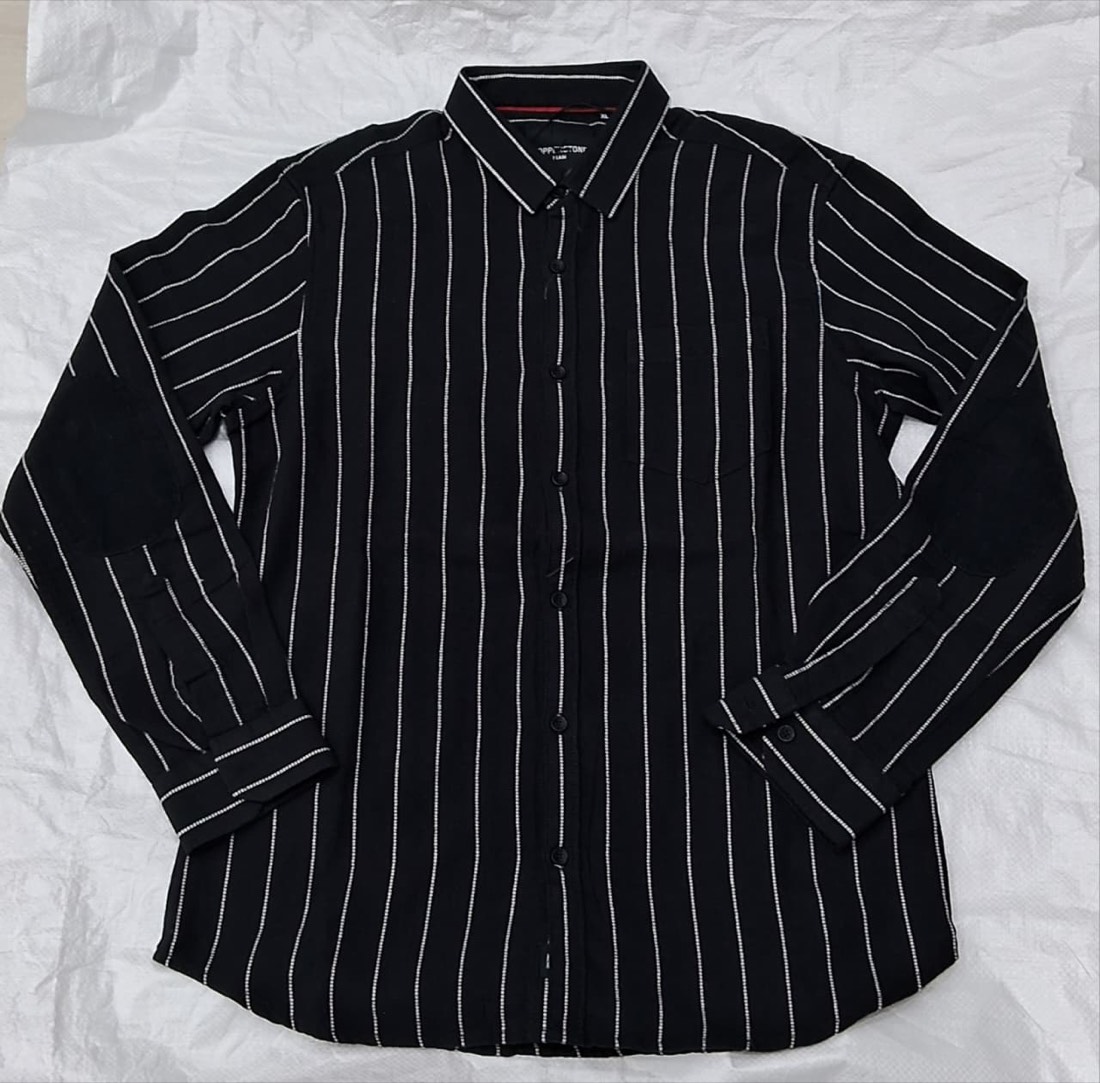
Black shirt with fine white stripes laid flat
Obs. 02 Dark stripe — the collar keeps the line crisp
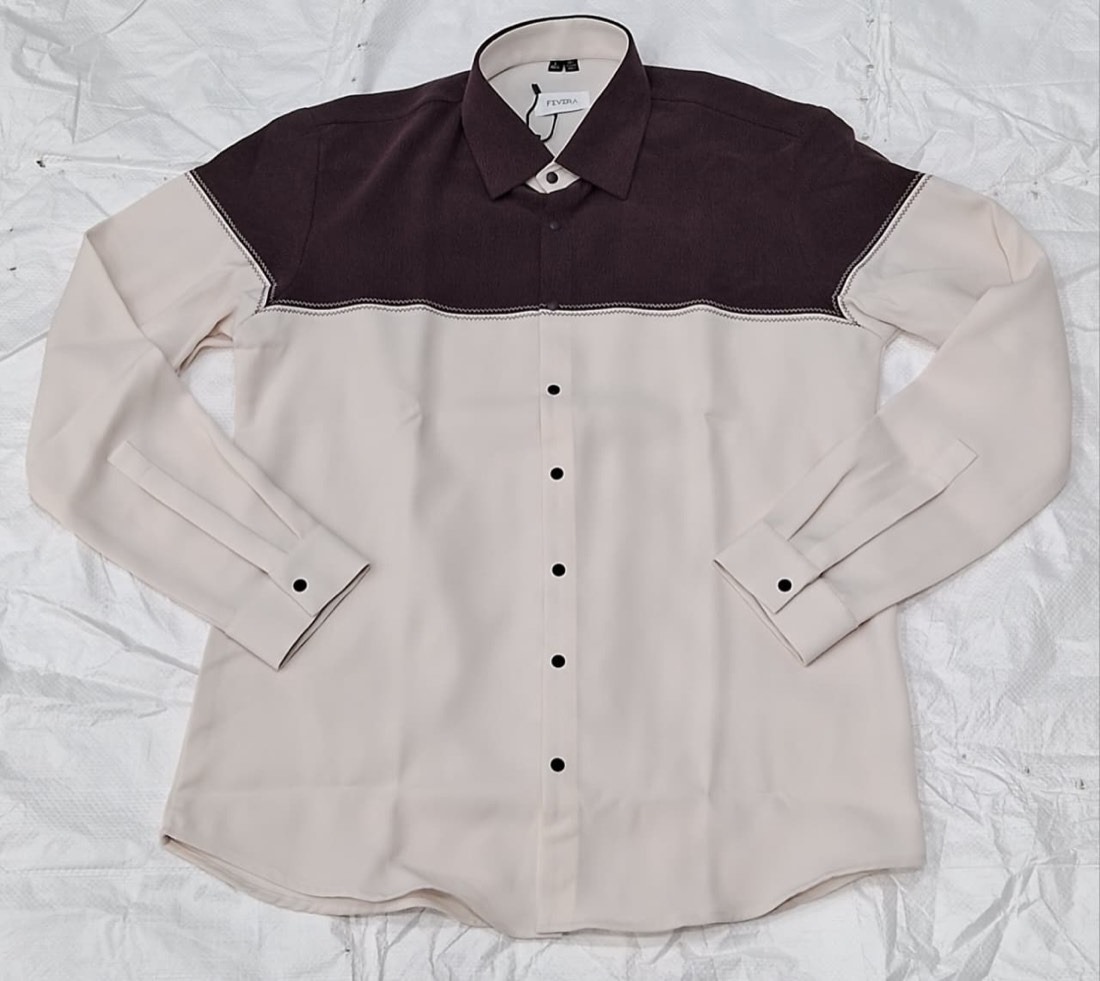
Two-tone shirt with a dark yoke, cream body and cream contrast collar
Obs. 03 Two-tone body with contrast collar
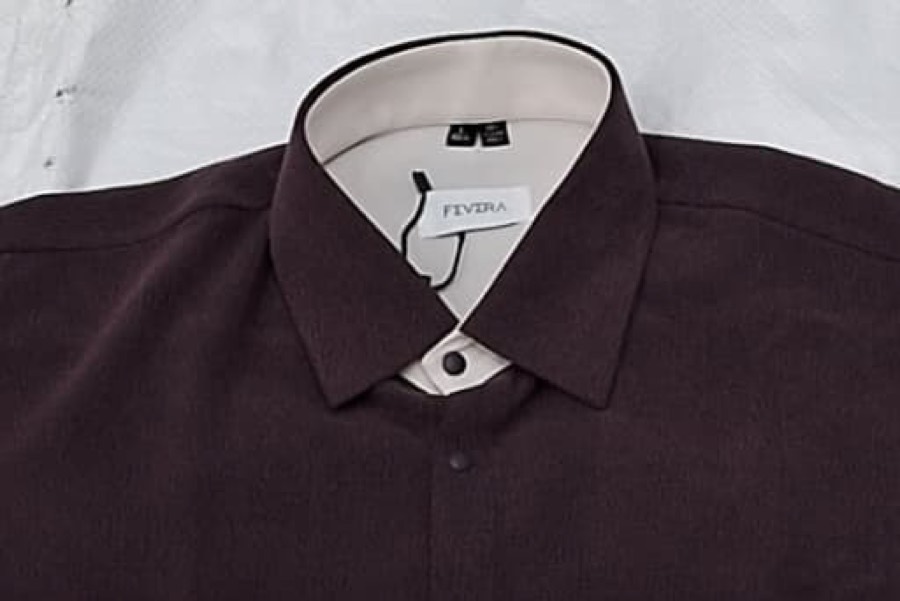
Close-up of a cream contrast collar on a dark brown shirt
Obs. 03a Contrast collar, detail
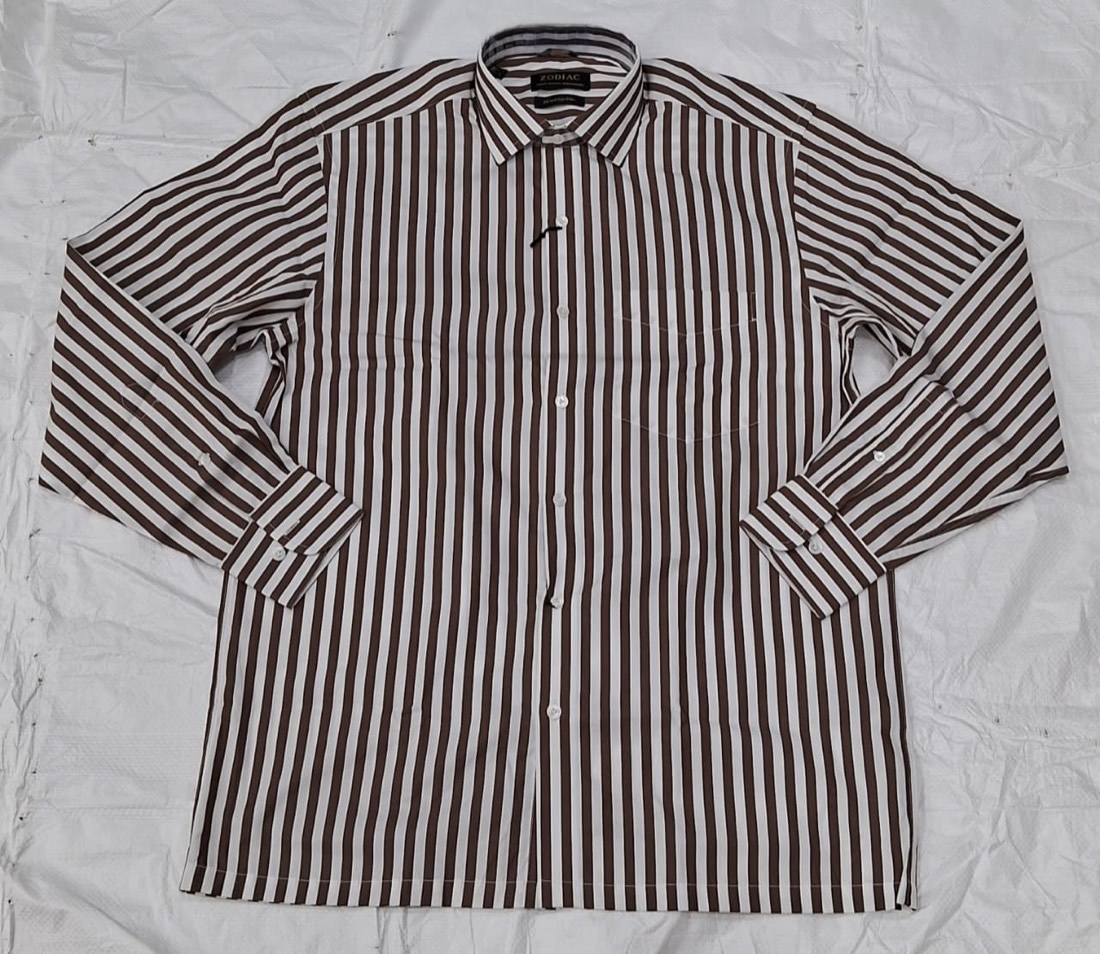
Brown and white striped men's shirt laid flat
Obs. 04 Brown stripe, classic proportions
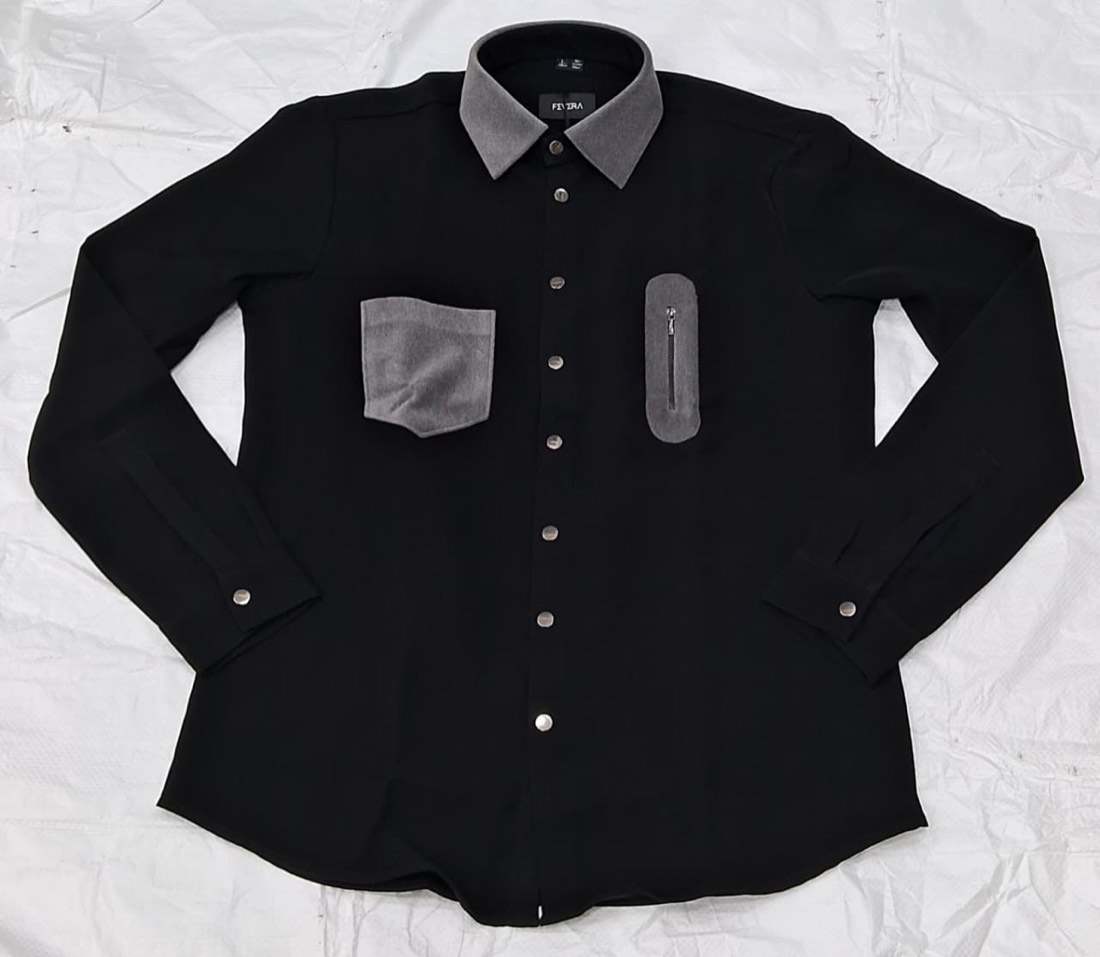
Black shirt with a grey contrast collar and grey pocket detail laid flat
Obs. 05 Contrast collar and pocket
AppendixCollar compatibility matrix

Collar, tie & occasion.

CollarSpreadSuggested knotsWithout a tieBest settings
PointNarrowFour-in-handPoints can drift; best with a tieTraditional business
ClassicModerateFour-in-hand, half-WindsorGoodOffice, everyday formal
Semi-spreadMediumFour-in-hand, half-WindsorVery goodModern office, presentations
SpreadWideHalf-Windsor, WindsorGood with a firm collarSuits, formal events
CutawayExtremeWindsor, half-WindsorGood with a firm collarStatement formalwear
Button-downModerateFour-in-handExcellentSmart casual, travel
ClubModerateSlim knotsGoodCharacterful formal wear
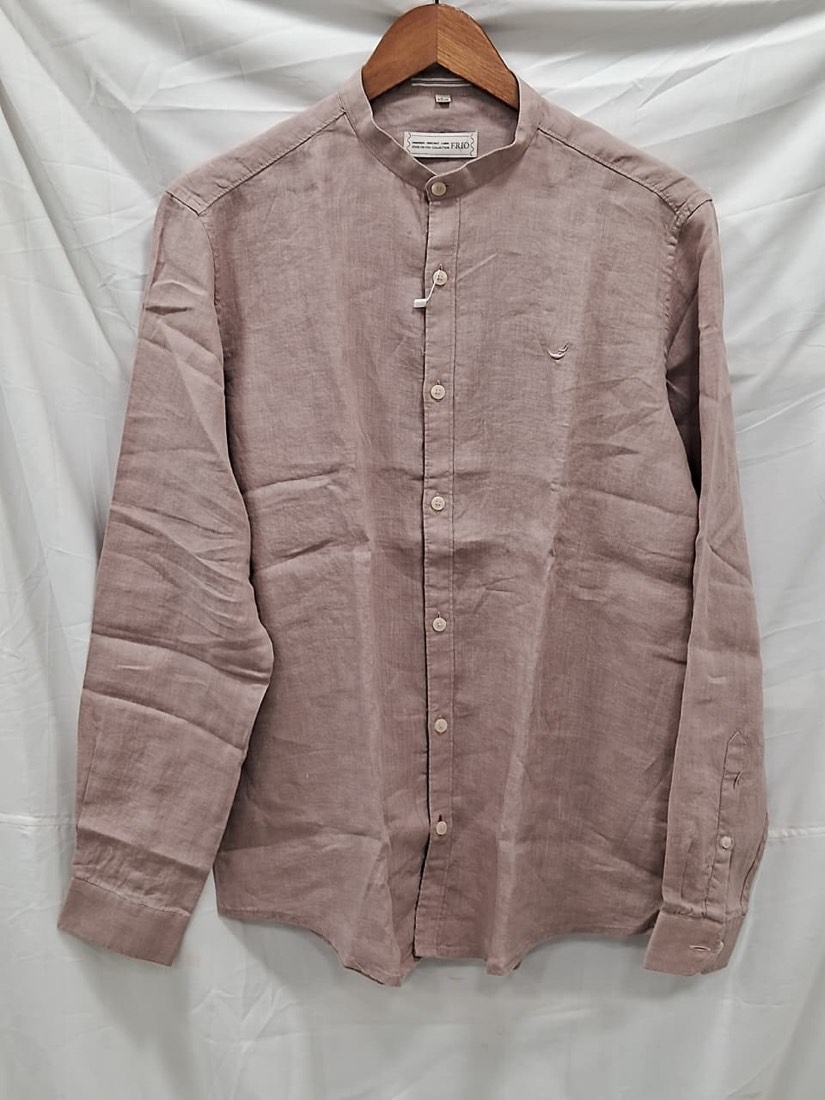
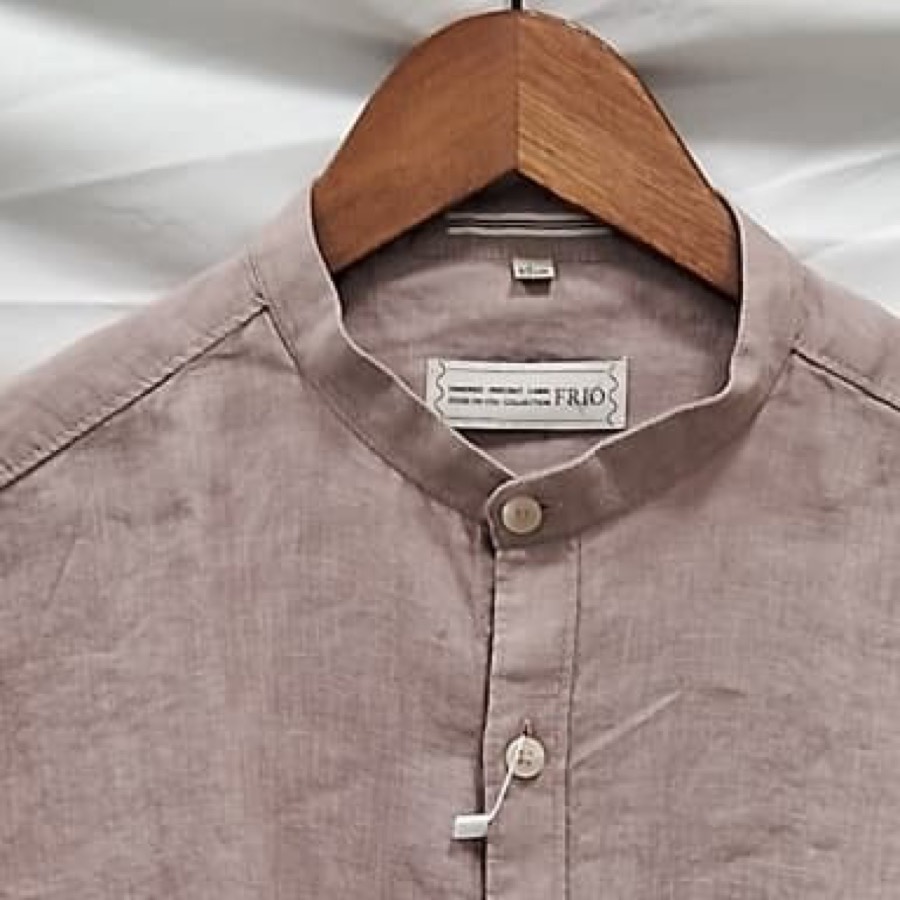
Pink textured shirt with a band (mandarin) collar on a wooden hanger
Note The band collar — a stand without leaves
Close-up of a band collar showing only the collar stand and top button

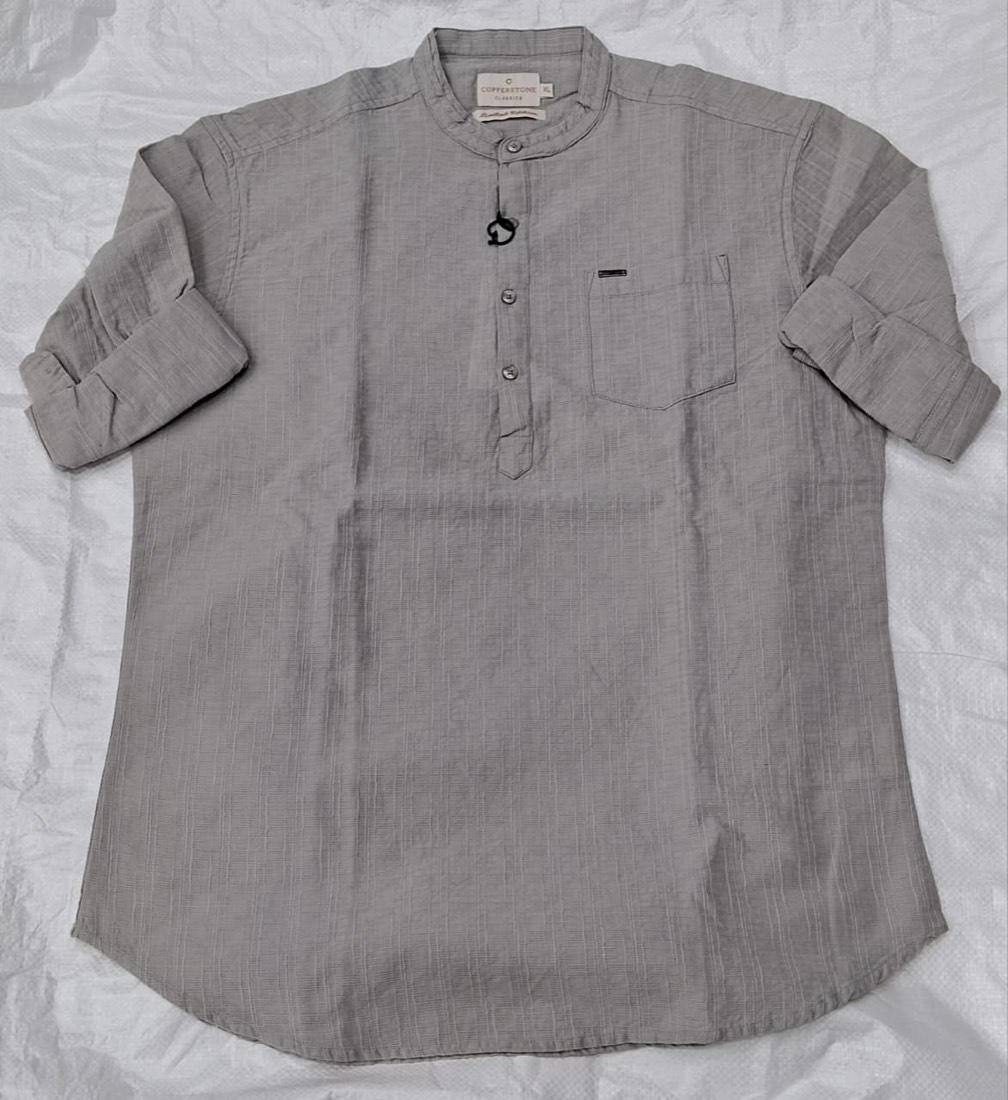
A band collar (often called a mandarin collar) is simply a collar stand with no collar leaves. It isn't worn with a tie and sits outside the formal collar family, but it shows clearly what the stand does: it is the foundation every other collar is built upon.

Grey band-collar shirt with a chest pocket laid flat
Note Band collar on a grey shirt
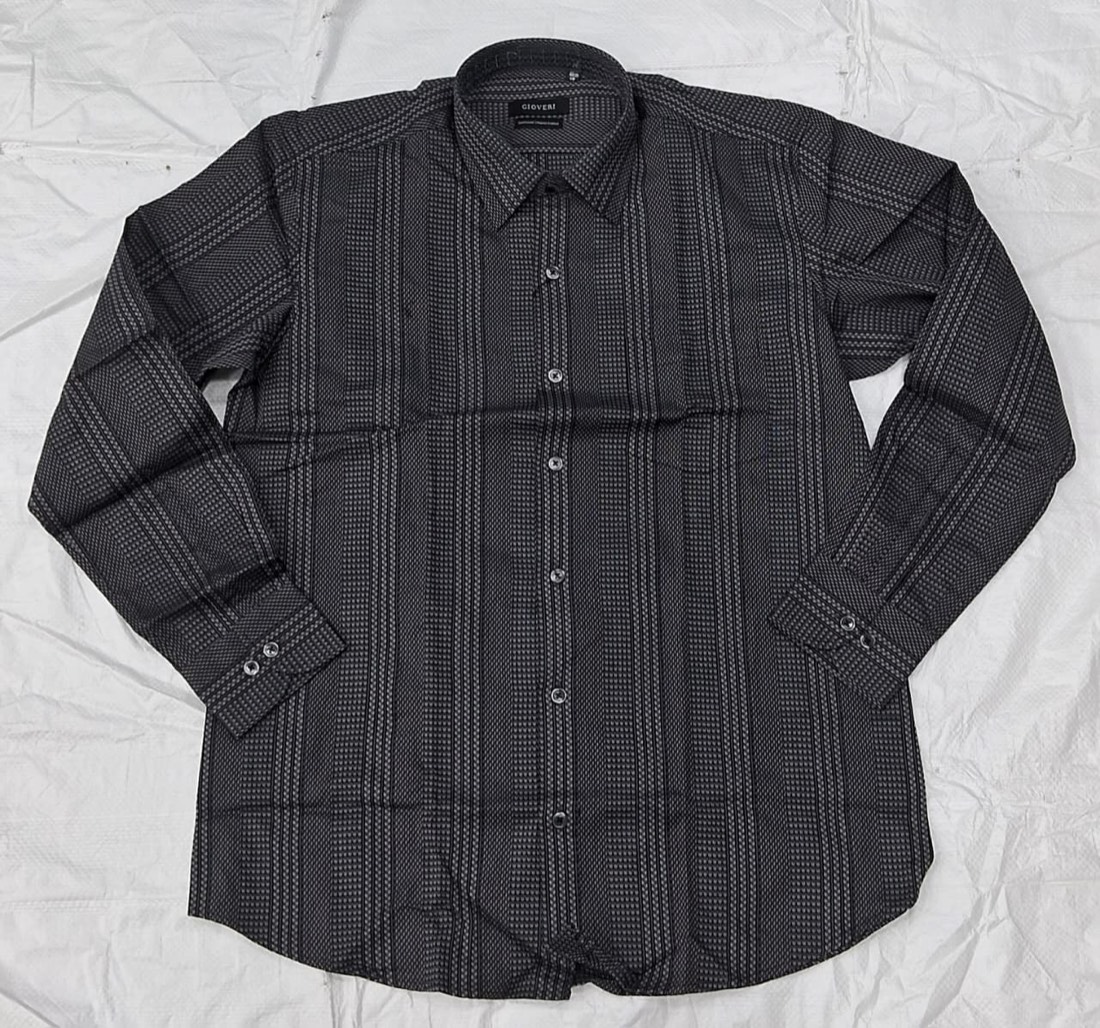
Charcoal long-sleeve shirt with a fine pattern and conventional collar laid flat
Compare Conventional collar with leaves
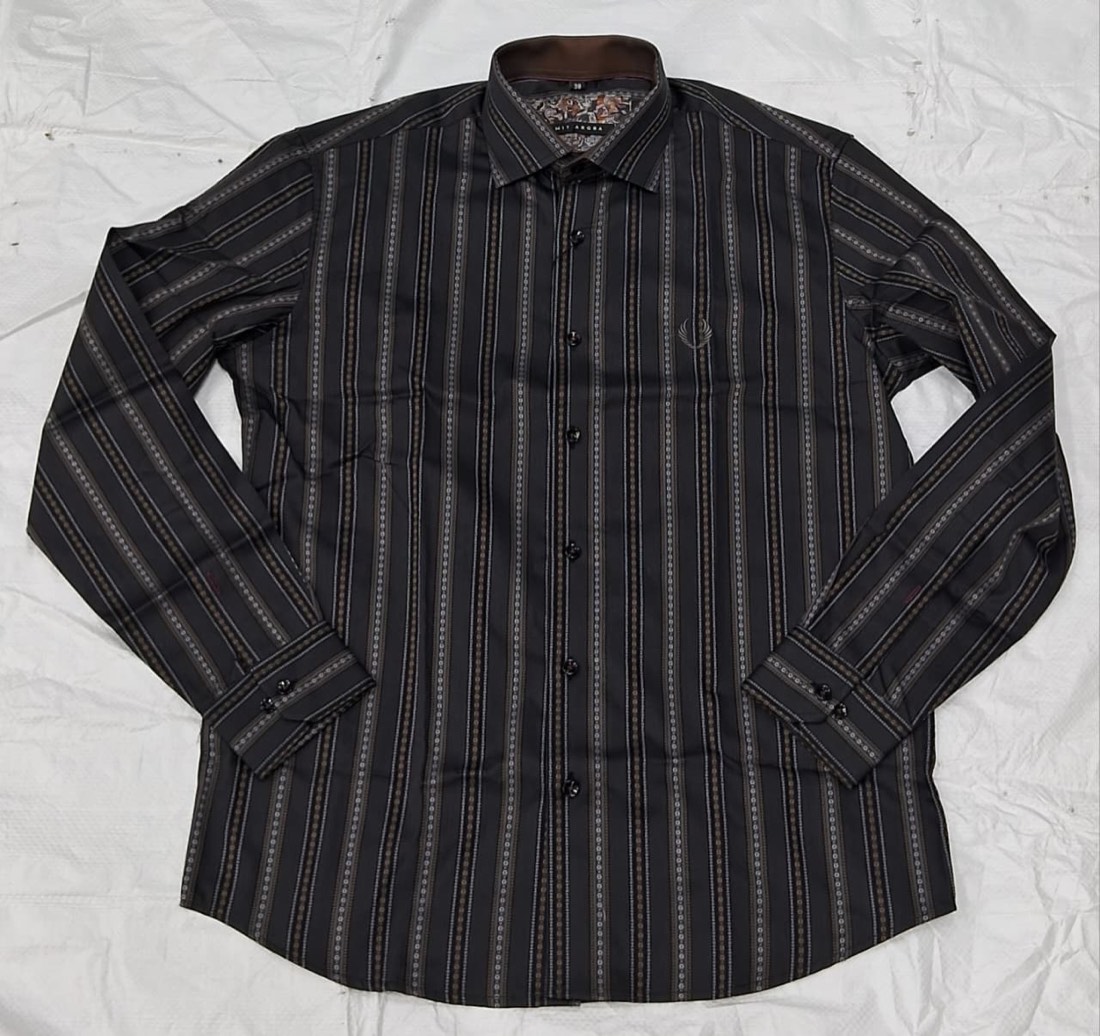
Black striped men's shirt with a dark collar laid flat
Obs. 06 Dark stripe with a compact collar

The collar frames everything.

Choose the collar for your face and the occasion, then let the cuffs and details finish the story.